
Facing a sudden $4,000 plumbing disaster or engine blowout when your checking account is sitting near zero is pure panic. Most people assume their only choice is risking their family home or car title just to get emergency cash. It turns out that getting approved for an unsecured bank loan has nothing to do with bank favors—it is about mastering the automated underwriting math behind the scenes. Let's look at the exact steps to clean up your numbers and secure your funds without putting a single personal asset on the line.

Your Fast-Track No-Collateral Loan Blueprint:
- Zero Asset Risk: Unsecured personal loans never require your home or car as collateral; lenders approve you based purely on credit history and steady cash flow.
- The 30% Utilization Rule: Pay down credit card balances before applying so your credit usage stays below 30%, unlocking lower APR rates.
- The 36% DTI Ceiling: Keep your total monthly debt payments under 36% of your pre-tax income to pass automated bank approval software smoothly.
- Shop Only with Soft Pulls: Always use pre-qualification tools that run soft credit checks to view real rates without triggering score-damaging hard inquiries.
Your Master Plan for Quick Loan Approval (No Assets Needed)
Getting approved for a fast bank loan without collateral does not rely on good luck. It does not matter if you know the bank manager personally. Getting approved relies entirely on cold, hard data.
Banks use very specific mathematical formulas to decide who gets money and who gets rejected. If you understand the exact rules their computers use, you can easily prepare your profile to force an automatic approval.
We are going to look at the three most practical, logical steps you must take right now. By following this scientific approach, you will secure your money without ever risking a single asset.
Step 1: Decode the Secrets of Your Credit Report
Watch this quick, helpful video to see exactly how your credit score is calculated and how you can easily fix errors. Seeing these steps in action will make the rest of this guide much easier to apply to your own life!
Because you are not offering your car or your house as a safety net, the lender has only one way to measure your trustworthiness. They must look at your current credit score.
Think of your credit report as your adult financial resume. If you want a massive banking institution to hand you thousands of dollars based on trust alone, that resume needs to look spotless.
Many people mistakenly assume their credit score is a mysterious number that banks invent just to punish them. That is completely false. Your score is based on a very clear mathematical formula.
The most important factor is your payment history, which makes up a large chunk of your total score. The bank wants to see that you consistently pay your bills on time, every single month.
The second most important factor is your credit utilization ratio. This specific number represents exactly how much of your available credit you are using at this very moment.
Let me give you a real-life analogy. Imagine you have a credit card with a $10,000 maximum spending limit. If you currently owe $9,000 on that card, your utilization is exactly 90%.
To a banking computer algorithm, you look incredibly desperate for cash. Even if you always make your monthly payments on time, lenders will likely reject your new loan application. They will logically assume you are heavily stretched and very close to going completely broke.
Your Actionable Advice for Today:
Before you ever apply for a no collateral loan, you must pull your free credit report online. Look very closely for small, silly errors. Sometimes a tiny debt that you paid off three years ago still shows up as an active, unpaid bill.
Dispute those errors immediately with the credit bureau. Next, try to aggressively pay down your current credit card balances. Your goal is to drop your overall credit utilization below 30%.
This one simple mathematical adjustment can boost your score by twenty points or more in a single month. This pushes you straight into the safe approval zone for top-tier lenders.
My "Credit Utilization" 48-Hour Hack ⚡
If your credit score is hovering just below approval territory, try this immediate fix: Make an early mid-cycle payment on your highest-balance credit card three days before your statement closing date. Credit bureaus only see the balance reported on the closing statement, so this simple move drops your reported utilization overnight and can jump your score by 15 to 30 points before you submit your loan application.
Step 2: Calculate Your Maximum Borrowing Limit Safely
Your monthly income is a highly important metric, but it only tells half of your true financial story. You could easily earn $10,000 every month and still get completely rejected for a simple bank loan.
Why does this happen so often? Because of a specific metric called your Debt-to-Income (DTI) ratio. This is the exact mathematical formula that bank underwriters use to determine if you can actually afford a brand new monthly bill.
Think of your gross monthly income as a large bucket of water. Every time you have a fixed legal debt payment, like apartment rent, a car loan, or a student loan, you scoop a cup of water out of that bucket.
Your DTI ratio is simply the percentage of the bucket that is already empty before you even buy food or pay for electricity.
Let us look at a practical scenario. Let us say you bring home $6,000 every single month before taxes. Your apartment rent is $2,000, your car payment is $500, and your minimum credit card payments equal another $500.
You are spending $3,000 on basic debts alone. Therefore, your DTI is exactly 50%. You are emptying half of your bucket on debts before the month even begins.
Most reputable, safe lenders get very nervous if they see a DTI ratio higher than 36%. If your DTI is sitting at 50%, they will automatically consider you a high-risk borrower. They will logically assume that adding a new loan payment will completely break your household budget.
Your Actionable Advice for Today:
Grab a calculator and a blank piece of paper right now. Write down every single debt payment you make each month. Do not include Netflix subscriptions or gym memberships; only include actual debts reported to credit bureaus.
Divide that total debt number by your gross monthly income. Multiply the result by 100 to get your exact percentage.
If your DTI number is too high, you must take action before applying for new money. Focus on paying off a small, annoying debt completely. Eliminating just one $150 monthly credit card bill can drastically improve your DTI ratio in the eyes of the bank's strict software.
Case Study: How Mark Beat the DTI Cutoff 💡
Mark brought home $5,000 a month with $2,100 in debt payments (a 42% DTI), causing two instant automated loan rejections. Instead of giving up, he used $400 from his emergency stash to completely pay off a retail card with an annoying $65 minimum monthly payment. That single tiny payoff dropped his DTI to 40.7%, sliding his application straight into the bank's automated approval bracket 24 hours later.
Step 3: Target the Right Lenders for Instant Decisions
One of the biggest mistakes average people make when looking for fast cash is applying at the wrong type of bank. Not all financial institutions are built to serve the same type of customer.
If you apply at a massive, conservative national bank, but you only have an average credit score, you are setting yourself up for a painful rejection. When you officially apply for credit, the bank performs a "hard inquiry" on your permanent credit file.
This hard inquiry acts like a bright red warning flag. It actually lowers your credit score by a few points instantly. If you walk into four different banks in one week and fill out applications, you will get four hard inquiries.
To other smart lenders, this makes you look deeply panicked. It looks like you are running desperately around town begging anyone for cash. They will automatically deny you, even if your score was decent to begin with.
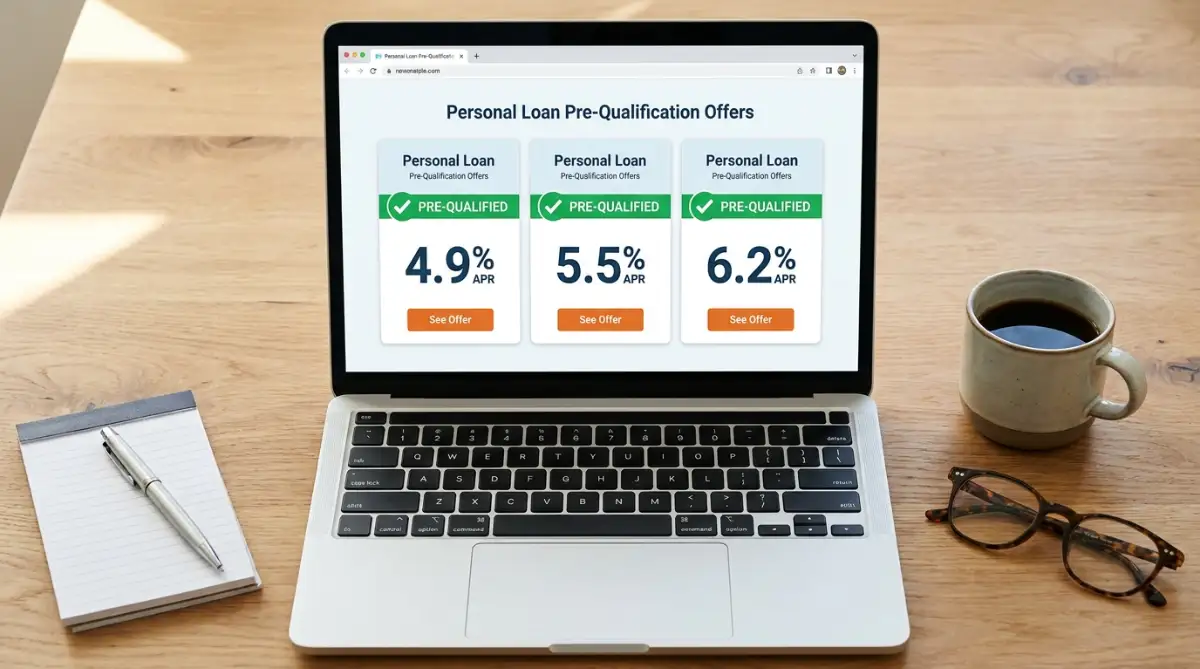
To win this game, you need to use the power of modern banking technology to your advantage. Today, many highly respected online lenders and local credit unions offer a fast pre-qualification process.
This pre-qualification process uses a "soft credit check." A soft check allows the lender to legally peek at your credit history without leaving any permanent, damaging mark on your score.
How this works in real life: You can sit comfortably on your couch with your laptop and fill out three different pre-qualification forms in twenty minutes. These modern lenders will show you exactly how much money they can offer you and what your exact interest rate will be.
Your credit score will not drop a single point during this entire shopping phase. You get to see all the actual offers on your screen before making any legal commitment.
Your Actionable Advice for Today:
Never let a bank manager run a hard credit check until you are 100% sure you want their specific loan terms. When I first applied for an unsecured loan, I made the mistake of letting a lender run a hard credit check just to "see my options," which immediately dragged my credit score down. My pro tip is to always ask the lender for a "soft pull" pre-qualification first. This small step keeps your score safe while you shop around for the best rate. Always ask the loan officer upfront, "Will this pre-approval require a hard pull or a soft pull?"
If they tell you it requires a hard pull just to see your options, stand up, thank them for their time, and walk away immediately.
Protect your credit score like it is your most valuable financial asset. Because when you are dealing with no collateral bank loans, your credit score truly is your only key to success. By shopping smartly and using soft pulls, you keep the power firmly in your own hands.
Build an Undeniable Paper Trail of Income
Having a steady job is a great starting point, but proving your actual cash flow is where many people fail. Banks want to see a rock-solid history of money entering your checking account every single month.
If you work a standard office job, this step is incredibly easy. You just hand the loan officer your last two or three paystubs, and their system instantly verifies your salary.
However, the modern economy has changed drastically for millions of hard-working people. Many of us now earn money through freelance writing, online businesses, or driving for rideshare apps. Traditional banks get extremely nervous when they see this type of independent income.
They view gig workers as a massive financial risk because their paychecks can go up and down. To beat their strict rules, you must create an undeniable paper trail of your earnings.
Let me give you a real-life scenario. Imagine you make $4,000 a month selling handmade furniture online. Instead of keeping that cash scattered across different mobile payment apps, you must deposit it all into one specific bank account.
Do this consistently every single week without fail. When the lender asks for proof of income, you can confidently hand them twelve months of perfectly clean bank statements.
This shows the underwriter that you have a highly reliable, steady cash flow. It proves your business is real and stable, completely destroying their initial doubts.
Borrow a Perfect Reputation Using a Co-Signer
Sometimes, your credit score might be slightly too low to get an approval on your own. This does not mean you have to give up and accept a painful rejection.
This is the perfect moment to use a powerful banking tool called a co-signer. A co-signer is usually a trusted family member or a very close friend who already has an excellent credit score and a strong income history.
When they officially sign the loan contract alongside you, they are essentially lending you their glowing financial reputation. The bank uses their high credit score to approve your application immediately.
Think of this strategy like trying to enter a highly exclusive VIP club in the city. If you walk up to the door alone, the strict security guard will probably reject you.
But if you walk up to that exact same door with a famous celebrity, the guard will smile and let you walk right inside. A co-signer acts as your personal financial VIP pass.
The bank feels totally safe because they know the co-signer is legally responsible if you stop making payments. However, you must treat this specific strategy with extreme caution and respect.
If you miss a single payment by a few days, you will instantly damage your friend or family member's perfect credit score. This kind of mistake can easily destroy a family relationship forever, so only use this option if you are completely certain you can afford the monthly payments.
Master Long-Term Maintenance for Future Approvals
Getting the emergency funds you need today is a truly great feeling. But your ultimate goal should be making sure that the next time you need cash, the process is effortless.
The absolute secret to borrowing success over the long term is building a completely flawless payment history starting today. Your payment history is the single most important piece of your total credit score puzzle.
To guarantee you never make a mistake, you must set up automatic payments on the exact day your no collateral loan is funded. Never rely on your own memory to manually pay a bill every month.
Life gets incredibly busy, and simply forgetting a payment can trigger painful late fees. If you accidentally pay 30 days late, the bank will report you to the credit bureaus, and your score will crash instantly.
By linking your monthly payment directly to your main checking account, the money moves completely on autopilot. You will never miss a due date, and your credit score will slowly climb higher and higher every single month.
Five Dangerous Traps That Will Destroy Your Finances
Even highly intelligent people make terrible choices when they are desperate for emergency money. The heavy panic of needing cash quickly often blinds them to the dangerous fine print hidden in bank contracts.
If you fall into these common traps, a simple unsecured bank loan can quickly turn into a financial nightmare. This nightmare can easily ruin your life for years. Here is exactly what you must avoid to keep your family safe.
1. The "Machine Gun" Application Method
When a traditional bank rejects a person, human nature makes them panic immediately. They run home, open their laptop, and apply to six different banks on the exact same afternoon.
This is the absolute worst possible action you can take when looking for money. Every single time a bank formally checks your credit file, it leaves a permanent mark called a "hard inquiry."
A hard inquiry temporarily lowers your score. If a smart lender sees six hard inquiries placed in one single week, they will immediately assume you are completely broke and desperate. They will automatically reject you, leaving your credit score heavily damaged for months.
2. Falling for the "No Credit Check" Illusion
If you have a lower credit score, you will inevitably see bright online ads offering instant cash with absolutely no credit check. These are almost always predatory payday lenders wearing a clever disguise.
They might happily hand you a $500 loan today without asking for collateral, but their hidden terms are completely toxic. Their interest rates can mathematically reach 400% or even higher.
If you miss just one small payment, the penalty fees multiply so quickly that you will never catch up. These bad companies are specifically designed to keep working-class people trapped in a never-ending cycle of extreme debt. Always stick to reputable lenders, even if the application takes a few extra days.
3. Chasing the Smallest Monthly Payment
It is completely natural to want the lowest possible payment leaving your checking account each month. Predatory lenders understand this human psychology perfectly, and they use it to quietly steal your money.
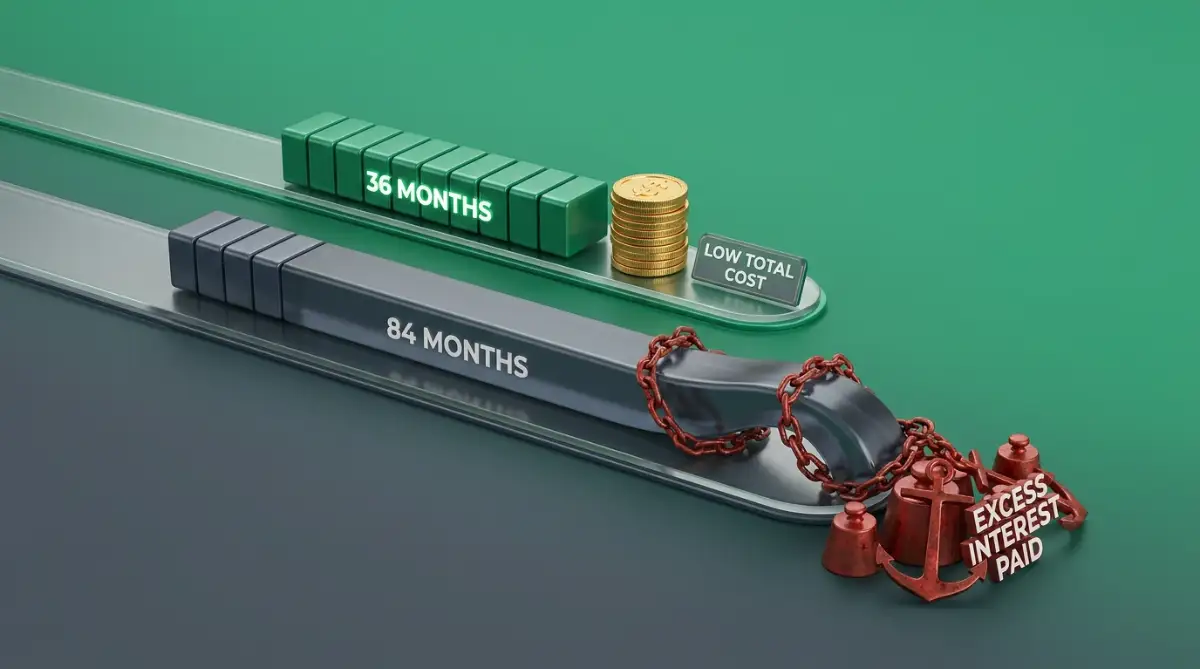
They will gladly offer you a tiny, comfortable monthly payment, but they will stretch the loan contract out over seven or eight long years. While the monthly bill feels incredibly easy to pay, the total interest you hand over to the bank is staggering.
Always look at the total overall cost of the loan before signing anything. Accepting a slightly higher monthly payment on a much shorter timeline will easily save you thousands of hard-earned dollars in pure interest.
4. Borrowing "Bonus" Money You Do Not Need
Let us pretend you need exactly $3,000 to replace a broken home heating system. When you apply, the bank smiles and tells you that you are actually approved for a full $8,000.
It becomes extremely tempting to take all $8,000 so you can buy a new television or take a weekend vacation. You must fight this urge with everything you have.
Every extra dollar you borrow today is a dollar you have to pay back tomorrow with heavy interest attached. Taking extra luxury money creates an unnecessary heavy burden that will slowly eat away at your future paychecks.
5. Ignoring the Prepayment Penalty Fine Print
Imagine you get a nice holiday bonus at your job and decide to act responsibly. You call the bank to pay off your entire personal loan two years ahead of schedule.
You expect them to congratulate you, but instead, they hit you with a massive penalty fee. This hidden trap is called a prepayment penalty.
Many greedy lenders hide these expensive fees deep in their contracts because they want to guarantee they collect years of interest from you. Before you accept any money, ask the lender directly if they charge fees for paying the balance off early. If they say yes, walk away and find a better bank immediately.
Your New Path to Complete Financial Peace
Navigating the complex world of bank loans does not have to be a scary or overwhelming experience. You now hold the exact same knowledge that professional bankers use every single day to protect their own money.
By taking a few hours to polish your credit profile and understand your true limits, you completely remove the heavy fear of rejection. You are no longer begging a wealthy bank for a desperate favor.
Instead, you are confidently presenting yourself as a highly reliable, mathematically safe customer. This simple shift in your mental approach gives you incredible power over your entire financial future.
Remember that a no collateral bank loan is simply a tool in your financial toolbox. Like a sharp saw, it can help you build a beautiful home, or it can cause massive damage if you swing it carelessly.
Take a deep breath and start with the very first step today. Pull your free credit report, dispute any silly errors, and write down your monthly debt numbers on a clean piece of paper.
You have the total ability to handle unexpected life emergencies smoothly and intelligently. Protect your credit score, read the fine print slowly, and take complete control of your financial journey starting right now.
Taking control of my own financial emergency was scary, but taking that first small step of looking at my credit report changed everything for me. You have the strength and the tools to protect your family and get through this tough moment. Grab a piece of paper, write down your numbers, and take charge of your future today.
Common Questions About Securing a No Collateral Loan
What is a no collateral loan and how does it work?
A no collateral loan, also called an unsecured personal loan, lets you borrow money from a bank without risking your house or car. The lender approves you based entirely on your credit history and promise to pay back the funds in monthly installments.
Can I get approved for an unsecured loan with bad credit?
Yes, it is possible, though you might face higher interest rates or need to check out specialized online lenders and credit unions. Bringing on a trusted co-signer with great credit can also boost your approval odds significantly.
Will checking my loan pre-qualification options lower my credit score?
No, as long as you choose lenders that use soft credit pulls for pre-qualification. This allows you to check your potential rates and terms without leaving any permanent marks on your credit report.
Why do banks prefer secured loans over unsecured loans?
Banks prefer secured loans because they hold physical assets as a safety net, meaning they can seize your property if you fall behind on payments. Unsecured loans carry more risk for the lender, which is why they look so closely at your credit score and steady income.
What should I check in a loan contract before signing?
Always scan the fine print for hidden origination fees and check whether the lender charges a prepayment penalty for paying off your balance early. Finding a loan with clear terms and zero hidden fees will save you a lot of money in the long run.
Financial & Health Disclaimer:
The content provided on globalsinfo regarding finance, crypto, real estate, health, and legal topics is strictly for informational and educational purposes only. We are not licensed financial advisors, doctors, or attorneys. Any decisions made based on our articles are at your own risk. Always consult with a certified professional before making any financial or health-related decisions.