
I used to stare at the ceiling every single morning, wondering why my body felt like it weighed a thousand pounds. You set your alarm hoping for a super productive day, but the second it rings, you just hit snooze and curl back up under the warm blankets. If you are tired of waking up feeling completely exhausted and mentally foggy, you are in the right place. I am going to show you exactly why your brain is fighting you in the morning, and how to fix it with a few simple, everyday tweaks.
What We Are Fixing Today:
- Why the snooze button is secretly ruining your energy for the rest of the day.
- The exact reason you should never drink coffee the second you wake up.
- How to trick your brain into waking up fast using simple sunlight.
- My favorite night-before tricks to make your mornings completely stress-free.
Decoding the Biology of Waking Up
When we talk about fixing a morning routine, most people instantly look for a new time management app or a fancy new coffee machine. But your ability to focus during the day has very little to do with external tools.
Your physical energy is entirely controlled by a highly sensitive biological clock known as your circadian rhythm. This internal clock manages a delicate balance of hormones that tell your brain when to sleep and when to hunt for food.
If your morning actions confuse this delicate hormonal balance, your brain will physically refuse to wake up. Let us explore the exact biological errors that are actively keeping you locked in a state of deep morning fog.
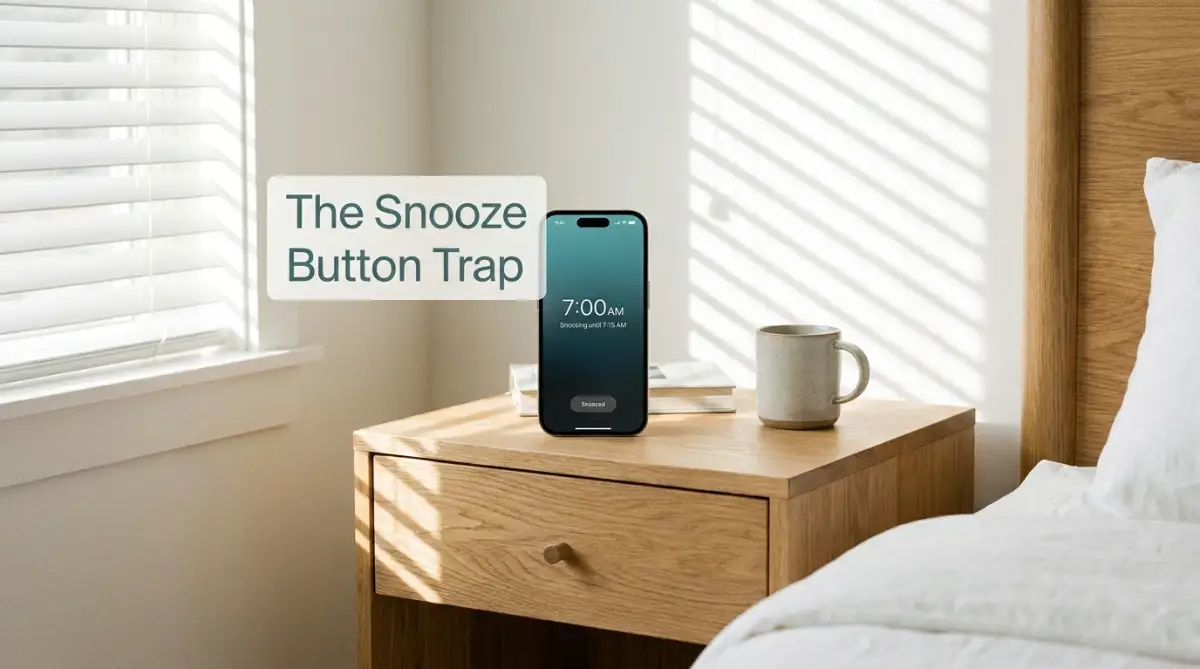
The False Comfort of the Snooze Button
We all love the snooze button. That tiny piece of digital glass offers us a warm, safe shelter from the cold reality of the morning.
But pressing that button is actually the most biologically destructive action you can take. To understand why, you have to look at how your brain handles sleep cycles.
A normal human sleep cycle lasts approximately ninety minutes. During this cycle, you move from light sleep into deep, restorative sleep, and then back up to light sleep.
When your first alarm rings, your brain naturally pulls you out of a light sleep phase. You are awake, but you choose to hit snooze and close your eyes for nine more minutes.
The Sleep Inertia Trap:
Because your brain thinks you are going back to sleep permanently, it instantly drops you straight back into the deepest, heaviest phase of the sleep cycle.
Nine minutes later, the alarm violently rips you out of that deep sleep phase. Your brain becomes completely chemically shocked and highly disoriented.
This violent interruption causes a medical condition called Sleep Inertia. Sleep inertia is that thick, heavy, confusing brain fog that makes you feel incredibly dizzy and physically weak.
Pro Tip / Expert Insight:
If you trigger severe sleep inertia by snoozing, that heavy brain fog will mathematically remain in your system for up to four full hours. This is exactly why you still feel exhausted during your morning meetings, even after drinking two cups of coffee.
Your Immediate Action Plan:
You must treat the snooze button as a toxic, forbidden button. Tonight, plug your smartphone into a charger located entirely across the bedroom, far away from your nightstand.
When the alarm rings tomorrow morning, you are physically forced to throw off the warm blankets, stand up on your two feet, and walk across the cold floor to turn the noise off. Once your feet hit the floor, your brain instantly recognizes that sleep is no longer an option, preventing sleep inertia from ever starting.

The Dehydration Shock to Your Nervous System
Imagine running an intense, sweaty marathon through a hot desert for eight straight hours without drinking a single drop of water. You would expect to feel physically ill, dizzy, and completely drained of energy.
This is exactly what happens to your internal organs every single night. While you sleep for eight hours, your body naturally loses a massive amount of water through heavy respiration (breathing) and normal night sweats.
You wake up in the morning severely, clinically dehydrated. Yet, instead of drinking water, millions of people stumble into the kitchen and immediately pour a massive cup of hot, black coffee.
The Caffeine Dehydration Cycle:
Coffee is a heavy, natural diuretic, which means it physically forces your kidneys to flush even more water out of your bloodstream. You are taking a severely dehydrated body and instantly removing the tiny bit of moisture it has left.
When your blood lacks water, it becomes physically thicker. Your heart has to work incredibly hard to pump this thick blood up to your brain.
Because your brain is not receiving enough smooth blood flow and oxygen, you experience massive tension headaches and an inability to focus on complex tasks.
Your Actionable Hydration Strategy:
Before you go to sleep tonight, place a massive, clear glass of room-temperature water directly next to your bathroom sink.
The exact second you walk into the bathroom to brush your teeth, you must drink that entire glass of water. Do not wait until you feel thirsty, because morning thirst is a delayed biological signal.
Flooding your empty stomach with sixteen ounces of pure water instantly restarts your metabolism, thins your blood, and sends a massive rush of clean oxygen directly to your prefrontal cortex. Only after you have finished this water should you allow yourself to touch the coffee machine.
The 7-Day Hydration Challenge:
I challenge you to try this for just one week: Do not let yourself drink a single drop of coffee until you have finished a full 16-ounce glass of water. Keep track on a sticky note on your fridge. I guarantee your morning headaches will disappear by day three.
The Dark Room Melatonin Trap
Your body does not actually know what time it is by looking at a clock. Your brain relies entirely on visual light signals to know when it is time to wake up and be productive.
The most important hormone for sleep is called melatonin. When your eyes see darkness, your brain produces heavy amounts of melatonin to keep you asleep.
Many people make the terrible mistake of waking up and spending their first hour getting dressed in a dark, heavily shaded bedroom. Because your eyes are not receiving any bright light, your brain assumes it is still the middle of the night.
Your pineal gland continues to pump heavy melatonin directly into your bloodstream, fighting against your physical attempts to wake up.
The Sunlight Reset Protocol:
You must aggressively shut down your melatonin production the moment you get out of bed. The most powerful way to do this is through direct, natural sunlight exposure.
Within the very first ten minutes of waking up, you must walk outside, stand on your porch or balcony, and look toward the bright morning sky for at least five full minutes.
If you live in a freezing climate or a dark apartment, you must immediately open every single window blind and turn on every bright overhead light in your house. Flooding your optic nerves with bright light sends an instant electrical shock to your brain, stopping melatonin production entirely and forcing your body into an active, high-energy daytime mode.
If you are still struggling to understand how powerful morning light is for your brain, you have to watch this quick visual breakdown. It completely changed how I set up my bedroom, and the tips shared here will make reading the rest of this guide much easier to apply.
Expert Insight on Morning Light:
Sleep researchers agree that morning sunlight is the strongest biological signal you can send to your brain. If you wake up before the sun rises, flipping on a very bright, cool-toned LED light in your room is your best backup plan to stop that sleepy feeling.
Advanced Biological Tactics for Peak Morning Performance
Once you understand the basic hormonal mechanics of sunlight and hydration, we must look much deeper into your physical strategy. Your brain is not a machine you can simply switch on and expect to run at maximum speed instantly.
According to sleep researchers at the National Sleep Foundation, your body's transition from sleep to full wakefulness relies entirely on biological momentum. You must learn to use these established physiological rules to protect your daily energy from sudden afternoon crashes.
Cognitive data shared by neuroscientists at the Stanford University Division of Sleep Medicine reveals that simple, regular temperature adjustments can wake your brain up fifty percent faster than chemical stimulants. Knowing how to manipulate your core body temperature is incredibly helpful before you try to start any heavy mental work.
If you try to bypass your body's natural limits with harsh energy drinks, you risk causing permanent damage to your adrenal glands. You must avoid these chemical errors just as you would avoid the silent DIY solar mistakes that destroy your home insurance payout to protect your wealth and peace of mind.
Just as dangerous password management mistakes that leave your digital identity exposed can ruin your digital security, neglecting your morning biology can permanently ruin your career performance. Let us explore the advanced, pro-level secrets you can use to build an unbreakable wall of energy for your daily work today.
The Secret to Manipulating Core Body Temperature
When you are deeply asleep, your core body temperature drops by a few degrees to conserve energy. To feel fully awake and alert, your internal engine has to physically heat back up.
Most people try to wake up by jumping into a hot, steamy shower. While a hot shower feels incredibly comforting on a cold morning, it actually relaxes your muscles and keeps you trapped in a sleepy, sluggish state.
The Shock Therapy Analogy:
Think of your nervous system exactly like a dormant, heavy car engine on a freezing winter morning. If you just let it idle quietly, it takes a long time to warm up.
But if you press the gas pedal quickly, the engine roars to life and heats up instantly. Taking a brief, cold shower is exactly like pressing the gas pedal for your nervous system.
Your Actionable Strategy:
You do not have to take an agonizing, ten-minute freezing shower. Wash your body normally with warm water, but for the final thirty seconds, turn the water handle entirely to cold.
When the freezing water hits your chest and back, your body goes into a brief, safe survival shock. Your heart rate spikes, your blood vessels constrict, and your brain instantly floods with adrenaline and dopamine to keep you warm.
When you step out of the shower, your core temperature rises rapidly as your body works to reheat itself. This sudden thermal shock completely erases any lingering brain fog, leaving you feeling sharp, electrified, and ready to dominate your morning tasks.
Creating a Frictionless Environment the Night Before
A massive amount of morning exhaustion actually comes from decision fatigue. When you wake up, your brain only has a specific, limited amount of energy to make choices.
If you spend your first thirty minutes deciding what clothes to wear, searching for your lost car keys, and figuring out what to cook for breakfast, you are draining your mental battery. By the time you sit down to do actual work, your brain is already tired from making twenty useless micro-decisions.
The Kitchen Prep Strategy:
You must remove all physical friction from your morning routine the night before.

Before you go to sleep, lay your exact work clothes out on a chair.
Place your car keys and your laptop bag directly next to the front door. Prepare your coffee machine so that all you have to do is push a single button when you walk into the kitchen.
When you wake up, you do not have to think; you simply follow the physical path you laid out the night before. Protecting your morning brainpower requires a strong, active protective habit.
Just like using natural home remedies to fix extremely dry and flaky skin heals your face gently without harsh chemicals, keeping a clean, pre-planned morning routine protects your mental stamina.

Silent Lifestyle Traps That Will Destroy Your Focus
Even highly intelligent people make terrible choices when they are desperate to find more energy during the workday. The intense stress of trying to meet deadlines often blinds us to basic biological logic and healthy habits.
If you fall into these incredibly common traps, your daily productivity will eventually experience a complete, permanent failure. This frustrating cycle can easily ruin your career progress, destroy your professional confidence, and wipe out your earning potential.
Here is exactly what you must avoid to keep your mind completely sharp and secure.
The "Skipping Breakfast to Save Time" Nightmare
When you are rushing out the door because you hit the snooze button, skipping breakfast seems like the most logical way to save ten minutes. You grab a coffee and run to your car, assuming you can just eat a large lunch later.
This is an absolute biological disaster waiting to happen. Your brain runs almost entirely on glucose, which it extracts from the food you eat.
After fasting for eight hours during sleep, your blood sugar is at its absolute lowest point. If you demand your brain to solve complex business problems without feeding it, you are literally asking a car to drive one hundred miles on an empty gas tank.
The Blood Sugar Crash:
Around eleven in the morning, your body will completely run out of stored energy. You will experience a massive, uncontrollable physical crash.
Your hands might shake slightly, your mood will become incredibly irritable, and your ability to focus will drop to zero. You will desperately reach for a sugary donut or a candy bar to fix the shaking, which only creates a second, worse crash two hours later.
I actually tried the whole "skip breakfast to save ten minutes" trick for an entire month, and it backfired terribly. I realized I was getting so shaky and irritable by 11 AM that I snapped at my coworkers and ended up binge-eating sugary office donuts anyway.
Always eat a small, high-protein breakfast, like two scrambled eggs or a handful of almonds, within the first hour of waking up. Protein provides a slow, steady release of energy that keeps your brain perfectly fueled until the afternoon.
The "Checking Emails in Bed" Error
One of the most dangerous, anxiety-inducing mistakes modern professionals make is opening their work email application while still lying under the covers. You think you are being highly productive by getting a head start on the day's problems.
In reality, you are voluntarily inviting high-level corporate stress directly into your private, safe sleeping environment. The moment you read an angry email from a client or a demanding message from your boss, your chest tightens.
Your heart rate spikes, and your brain instantly floods with cortisol. You are starting your day in a defensive, panicked state before your feet even touch the floor.
DO's and DON'Ts For Mental Clarity:
- DO leave your phone charging in the kitchen or the living room overnight.
- DO NOT read the news or open social media apps during your first waking hour.
- DO drink sixteen ounces of room-temperature water before touching any caffeine.
- DO NOT rely on sugary pastries or heavy carbohydrates for your morning energy boost.
Your morning should be a sacred, quiet time dedicated entirely to waking your body up safely. Never let outside stress dictate the tone of your morning.
A Word from the Expert: Your Blueprint for Endless Energy
Fixing a broken, exhausting morning routine does not have to be an overwhelming or painful experience. You now hold the exact same strategic knowledge that professional performance coaches use to train top-tier corporate executives.
By taking a few short days to fix your hydration, control your light exposure, and eliminate the snooze button, you completely remove the fear of afternoon burnout. You are no longer crossing your fingers and hoping you have enough energy to survive the workday.
Instead, you are confidently commanding your own biological engine like a seasoned professional. This simple shift in your physical habits gives you incredible power over your entire career future.
Your Energy Protection Action Plan:
- Move the Charger Tonight: Place your phone charger entirely across the room to force yourself out of bed tomorrow morning.
- Prepare the Water: Set a large, clean glass of water next to your bathroom sink so you cannot forget to hydrate.
- Embrace the Cold: Tomorrow morning, turn your shower handle to cold for exactly thirty seconds right before you step out.
- Hunt for Sunlight: Walk outside or open every single window blind in your house to stop your brain's melatonin production instantly.
Your mind and body are brilliant, highly capable machines that simply need the right type of daily maintenance to thrive. Do not let basic nighttime laziness or the comfort of a warm blanket steal your professional success.
Read your biological signals carefully, protect your morning peace fiercely, and take complete, fearless control of your daily productivity starting right now.
Taking control of my morning routine honestly changed my entire life and finally gave me my daily energy back. You do not have to be perfectly disciplined on day one, just pick one small change like drinking a glass of water first thing tomorrow. I promise you will start feeling the difference almost immediately.
Common Questions About Waking Up With High Energy and Focus
Why does pressing the snooze button make me feel even more exhausted all morning?
Pressing the snooze button tricks your brain into starting a new sleep cycle, so when the alarm goes off again nine minutes later, it violently rips you from deep sleep. This sudden interruption causes a severe biological condition called sleep inertia, leaving you with heavy brain fog for up to four hours.
Is it a good idea to drink coffee immediately after waking up in the morning?
Drinking coffee immediately after waking up is a mistake because your body is severely dehydrated from eight hours of overnight breathing. Consuming heavy caffeine on an empty, dehydrated stomach forces your kidneys to flush out the remaining moisture, leading to tension headaches and fatigue.
How does natural sunlight exposure help me wake up faster in the morning?
Natural sunlight floods your optic nerves with bright light, which instantly halts your brain's production of the sleep hormone melatonin. This sudden light signal triggers an electrical wake-up call that forces your body out of nighttime mode and into high-energy daytime alertness.
Why is taking a short cold shower at the end of my routine so effective?
Finishing your shower with thirty seconds of cold water shocks your nervous system safely, causing your heart rate to spike and your brain to flood with adrenaline and dopamine. As your body works to reheat itself, your core temperature rises rapidly, instantly erasing brain fog and leaving you feeling electrified.
Should I check my work email or news feeds right after opening my eyes?
Checking your work email or negative news feeds while still in bed floods your brain with cortisol and triggers a high-stress survival state before your feet even touch the floor. You should always protect your first waking hour by staying completely offline to keep your morning peace and mental focus secure.
Disclaimer: The information provided in this article is for educational and general informational purposes only and does not constitute formal medical, psychiatric, or dietary advice. Individual sleep requirements, nutritional needs, and physical health conditions vary heavily by person and genetic background. Always consult with a licensed physician, certified sleep specialist, or registered dietitian regarding any severe chronic fatigue, sleep disorders, or drastic changes to your daily health routine.