We all love the incredible feeling of driving past a gas station without stopping, knowing our electric vehicle is saving us serious money. But let's be totally honest for a second—staring at your dashboard and watching your maximum range slowly drop every few months is incredibly stressful. You probably plug your car in every single night just like your phone, completely unaware that this simple habit is silently damaging your expensive battery pack. Today, I am going to show you exactly how to stop this hidden degradation and keep your EV running perfectly for years.
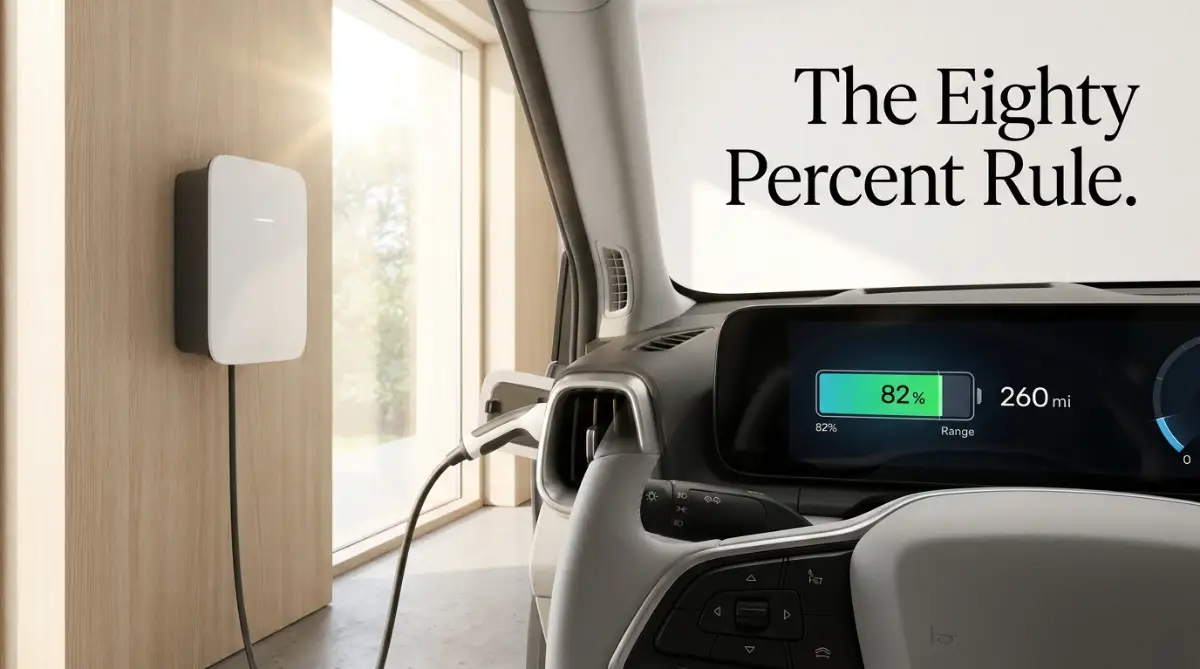
Essential Takeaways to Protect Your EV Battery:
- Stop charging to 100% every night; keep your daily charge limit set strictly to 80%.
- Avoid using DC public fast chargers for daily commutes, as the extreme heat degrades cells quickly.
- Never let your car sit parked overnight with less than a 10% battery charge.
- Give your vehicle at least 30 minutes to cool down after high-speed highway driving before plugging it in.
Decoding the Chemical Stress in Your Battery
Before you plug your car into the wall tonight, you must understand how a lithium-ion battery actually stores energy. Your car's battery pack is not a simple container that you can fill to the top like a gas tank.
It is a highly sensitive chemical ecosystem that runs on strict biological and physical rules. When you charge your car, you are physically forcing lithium ions to move from one side of the battery cell to the other under intense electrical pressure.
According to battery research published by the U.S. Department of Energy, when you charge your car, you are physically forcing lithium ions to move from one side of the battery cell to the other under intense electrical pressure.
If you leave the battery in a state of extreme pressure for too long, the internal chemicals begin to break down permanently. This chemical breakdown slowly reduces the total amount of energy your battery can hold in the future.
Let us look at the four most common, highly expensive charging mistakes that are actively threatening your electric car's battery life right now.
The Danger of the "Always at 100%" Mentality
The single biggest mistake new electric car owners make is plugging their vehicle in every single night and letting it charge to a full one hundred percent. This is a very natural habit because we do the exact same thing with our smartphones without thinking twice.
This is a very natural habit because we do the exact same thing with our phones without thinking twice, which is actually one of those overlooked habits that quietly destroy your smartphone battery lifespan.
However, your phone’s tiny battery is cheap to replace, while your car’s massive battery pack costs thousands of dollars. Leaving your car sitting at a full one hundred percent charge is like putting your battery under a constant state of extreme high blood pressure.
Let us use a simple balloon analogy to understand this.
If you blow a rubber balloon up to its maximum capacity and immediately let the air out, the rubber snaps back to its original shape. But if you blow that balloon up to its absolute maximum limit and leave it sitting on a shelf for three weeks, the rubber permanently stretches out and loses all of its natural elasticity.
Your battery's internal chemistry behaves in this exact same logical way. When your battery sits at one hundred percent, the internal chemical structures are stretched to their absolute physical limit.
If you are still a little confused about why charging your electric car to a full 100% is actually a bad idea, watch this quick and simple video below. It perfectly explains the hidden science inside your battery so you can easily protect your car's range for years to come!
Your Actionable Strategy:
You must stop charging your car to one hundred percent for your daily, local drives. Open your vehicle’s settings menu tonight and set the maximum charge limit to exactly eighty percent.
The twenty-to-eighty percent range is the absolute sweet spot for lithium-ion chemistry. Operating within this window keeps the internal chemical pressure extremely low, ensuring your battery cells stay healthy and young. Only charge to one hundred percent when you are preparing for a long, out-of-town road trip where you actually need every single mile of range.
Quick Myth vs. Fact: The "Memory Effect"
- The Myth: Many people still believe you have to drain a battery completely to zero before recharging it, otherwise the battery "forgets" its total capacity.
- The Fact: This was only true for ancient nickel-cadmium batteries used in old laptops from the 1990s. Modern lithium-ion EV batteries actually hate dropping to zero. Frequent, small top-offs (like going from 40% to 70%) are vastly healthier for your car than one massive, deep charging cycle.
The Silent Heat Trap of DC Fast Charging
We all love the incredible convenience of public DC fast chargers. Being able to plug your car in and gain an eighty percent charge in just twenty minutes feels like absolute magic.
But this rapid speed comes with a very heavy physical tax that your battery has to pay in the background. That tax is extreme, concentrated heat.
But this rapid speed comes with a very heavy physical tax. Just as gamers must save your console simple ways to spot and avoid overheating issues, you must protect your car's massive battery from extreme, concentrated heat that cooks it from the inside out.
When you push a massive amount of electrical current into your battery pack so quickly, it generates intense thermal energy. Think of this process like trying to pour water through a very narrow funnel.
The Funnel Analogy of Fast Charging:
If you gently trickle water into a funnel, it flows smoothly and safely into the bottle below. But if you try to dump an entire bucket of water into that small funnel in five seconds, the water will violently overflow and spill all over the floor.
DC fast charging is that giant bucket of water, and the intense heat generated by the fast flow slowly cooks your battery cells from the inside out. Overusing fast chargers will degrade your battery's lifespan twice as fast as using a standard Level 2 home charger.
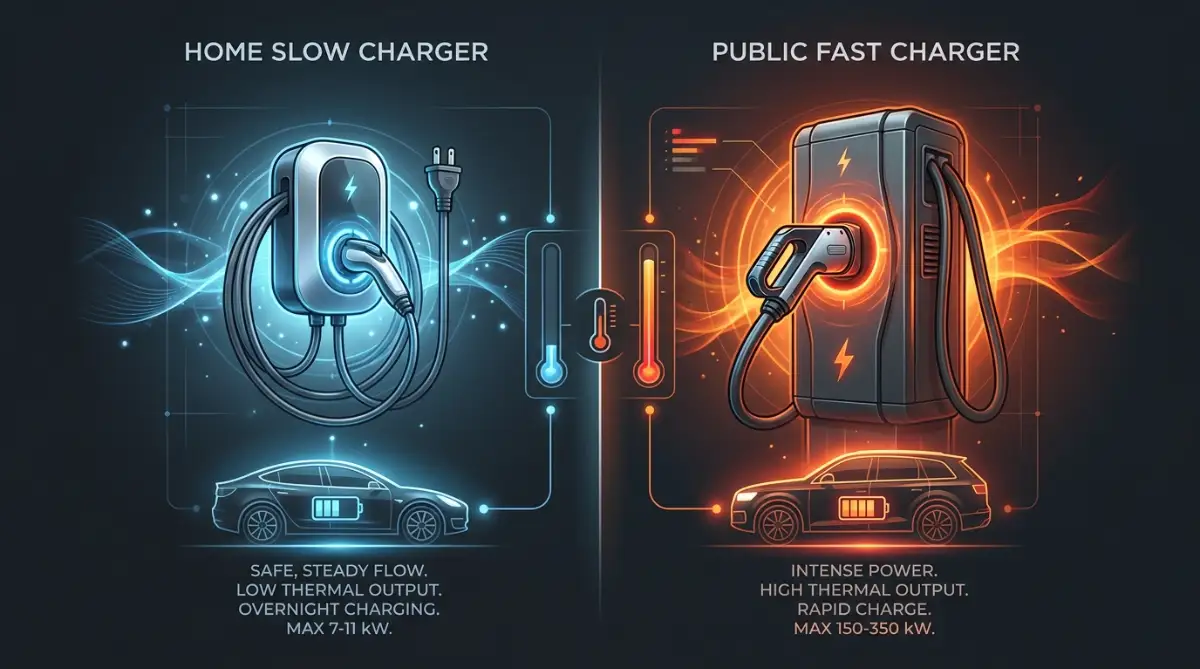
Extensive automotive testing conducted by Consumer Reports confirms that consistently overusing DC fast chargers will degrade your battery's long-term lifespan significantly faster than using a standard Level 2 home charger overnight.
I learned this the hard way when I relied purely on public fast chargers during my first summer with the car. I thought I was saving so much time, but the extreme heat ended up permanently knocking about fifteen miles off my maximum range in just a few short months. Now, I strictly use my slow home charger overnight and treat fast chargers like an absolute emergency backup plan.
Pro Tip / Expert Insight:
Always avoid using DC fast chargers on hot summer afternoons. The high ambient temperature combined with the extreme heat of the rapid charge creates a thermal environment that severely damages the battery. Use slow, overnight Level 2 home charging for your daily needs, and only use fast chargers when you are traveling long distances.
Letting Your Battery Drop to Absolute Zero
While holding too much charge is dangerous, letting your battery drop to an absolute zero percent is equally catastrophic. When your battery level drops below ten percent, the internal chemical structures start to starve.
If a lithium-ion battery sits at zero percent for more than a few days, some of its internal cells will physically collapse and lose their ability to hold any electrical charge ever again. This can permanently kill several miles of your driving range in a single weekend.
Your Actionable Strategy:
You must treat your ten percent battery level as your absolute emergency limit. Never let your car sit parked in your garage overnight with a low charge.
If you get home with a low battery, plug your car into your home charger immediately to bring it back up to a safe twenty percent. This simple habit keeps your battery's internal chemistry stable and prevents permanent cell death.
Real-World Scenario: The Cold Weather Trap
If you live in a freezing climate, you need to be extra careful with low batteries. Cold temperatures naturally slow down chemical reactions, temporarily hiding up to 20% of your available range. If you park outside overnight with only 15% battery during a winter storm, the cold might actually drop your usable range to zero by morning, leaving you completely stranded in your own driveway. Always try to keep your winter baseline closer to 30%.
Charging Immediately After High-Speed Highway Drives
Imagine running a full marathon in the scorching summer heat. The moment you cross the finish line, your body is completely exhausted, and your internal temperature is extremely high.
You would never immediately jump into a hot sauna to relax. Your body needs time to slowly cool down and rest in a shaded area.
Many electric car owners make the terrible mistake of driving eighty miles per hour on the highway for two hours and then immediately plugging their hot car into a fast charger. This is a massive mistake that causes immediate, severe thermal damage.
Your battery is already very hot from the high-speed drive, and plugging it in immediately forces the temperature even higher.
Your Actionable Strategy:
When you arrive home from a long, fast highway trip, give your car at least thirty minutes to sit parked in your shaded garage before you plug the charging cable in. This simple cooling period allows the battery's liquid cooling system to safely lower the internal temperatures.
Plugging your car in only after the battery has cooled down completely prevents unnecessary thermal stress, keeping your battery healthy for years. Protecting your expensive vehicle requires this level of careful, everyday attention to detail.
Common Questions About Protecting Your Electric Vehicle Battery
Why does charging my electric car to a full 100% damage the battery over time?
Leaving your electric car sitting at a full 100% charge keeps the internal chemical structures stretched to their absolute physical limit, creating extreme high pressure. Operating within a twenty-to-eighty percent range is much safer and keeps the battery cells healthy and young.
How does public DC fast charging affect my EV battery lifespan?
Public DC fast charging pushes a massive amount of electrical current into your battery pack in minutes, generating intense thermal energy that slowly cooks the cells from the inside out. Overusing fast chargers can degrade your battery twice as fast as standard Level 2 home charging.
Is it safe to plug in my electric car immediately after driving fast on the highway?
Plugging your hot car into a charger right after a high-speed drive causes immediate, severe thermal damage because the battery temperature is already elevated. You should always give your car at least thirty minutes to sit parked in a shaded garage so the liquid cooling system can lower the internal temperature first.
What happens if I let my electric vehicle battery drop to absolute zero percent?
When a lithium-ion battery drops below ten percent, the internal chemical structures start to starve and some cells can permanently collapse. Letting your car sit at zero percent for a few days can kill several miles of your driving range in a single weekend.
Disclaimer: The information provided in this article is for educational and general informational purposes only and does not constitute professional financial, accounting, tax, or legal advice. Business regulations, tax laws, and banking requirements vary heavily by region, state, and specific industry. Always consult with a certified public accountant (CPA), licensed financial advisor, or business attorney regarding the exact financial management, structures, and requirements of your personal startup.